Probate bonds are sometimes referred to as fiduciary bonds – are surety bonds that protect an estate’s beneficiaries and creditors in the event of fraud or negligence. These bonds are required when a person named as an executor of an estate passes away, or if there are disputes associated with the estate. It is important to understand the purpose of probate bonds and how they work so you can make informed decisions when dealing with the administration of an estate.
What Does A Probate Bond Do?
A probate bond is designed to guarantee that the executor appointed by the court will perform his or her duties with good faith, honesty, and due diligence. These bond requirements vary from state to state, but generally cover a range of issues including accounting for estate assets, making timely payments to creditors, filing required tax documents, managing investments in a prudent manner, and following all applicable laws and regulations pertaining to estates.
How Much Is A Probate Bond?
The amount of a probate bond is set by the court based on factors including the size and complexity of the estate. The bond must be purchased through a surety company prior to any action being taken in regards to the estate’s affairs. The cost of purchasing a probate bond varies depending on factors such as the size and complexity of the estate, but generally ranges between 1-2% of total assets.
If any fraudulent or negligent activity occurs during administration, then those affected may seek recourse through the surety company who issued the bond. The bonding company will investigate each claim carefully before determining whether compensation should be given. If compensation is approved then it will be paid out from funds held in trust by the bonding company, up to the amount listed on the bond itself.
Final Thoughts On Probate Bonds
While probate bonds provide necessary protection for beneficiaries and creditors during administration periods, not everyone may need one when administering an estate. To determine whether you should get one for your situation it is best to consult with an experienced legal professional who understands how long probate takes and the probate law in your area. With their help you can determine whether purchasing a probate bond is needed for your particular case so that you can ensure that appropriate protections are put into place from start to finish throughout this process.
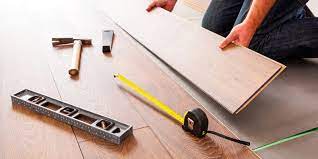
You can rent most of the equipment and supplies needed to scrape a floor down to smooth, bare wood. A drum sander makes short work of open areas, a disk-type edger sands along the baseboards, and an orbital sander smoothes out circular marks made by the edger.
Also plan to rent a buffer for polishing the floor after you´ve applied sealer. And to get at hard-to-reach areas under radiators and other obstructions, consider an offset sander.
Check with local rental agencies to learn if you should reserve the machines in advance. In any case, be sure to pick them up early in the day to make sure you have enough time to do all the work you plan to do.
When you pick up the equipment, have the dealer demonstrate how it works. Incorrectly used, these powerful machines can gouge a floor in a hurry. Also, make sure you learn how to put sandpaper snugly on a drum sander. Otherwise, it will tear – and paper is expensive.
Sandpaper
The rental agency should also supply you with sandpaper. Three cuts with the grain will give most floors a smooth surface, but if the floor is in bad condition, you may need to make four passes, the first two diagonally and the last two with the wood grain. Use progressively finer sandpaper with each cut. If you are removing paint or sanding very rough floorboards, start with very coarse 20-grit paper. The numbers get higher as the paper gets finer. For sanding new, fairly smooth strip or plank flooring or parquet; start with 60-grit open-coat paper. Make the second pass with 80-grit open-coat paper. Follow this with a third cut with 120-grit open-coat paper if the floor is softwood such as pine, fir, hemlock spruce. Use closed-coat paper for third cuts in hardwoods such as oak, birch, maple, hickory, or ash. The closed-coat paper has more grits per square inch than does the open-coat type.
Wood finishing tools
Apply floor finishes with a spray gun, natural-bristle brush, or a special lamb´s wool applicator. Load the applicator from a roller pan, or simply pour a puddle of finish on the floor and spread it out with the applicator.
If you plan to stain the floor or seal it with a penetrating oil finish, you will also need lots of clean rags.
Tools for installing resilient flooring
Cut a template for sheet goods with scissors and a utility knife. You can also cut the flooring itself with a utility knife, but a linoleum knife – which has a hooked blade – works better. You´ll also need a metal straightedge for guiding cuts. Apply flooring adhesive with a notched trowel. With sheet goods, any floor wider than 12 feet – the longest roll available – will require a seam. This must be seated with a steam roller.
When we talk about pink in an interior design, we immediately think about a bedroom or a children’s room. These are the most appropriate places for the pink color in a house. However, pink is also used in bathroom design. Pink is a very romantic and relaxing color. That is why it is so pleasant to relax in warm water with fragrant foam and to daydream in a pink bathroom. However, pink is not very popular color for bathroom design. Why is that? Probably, not many people know how to decorate a pink bathroom.
Why pink is not very popular? Firstly, not everyone likes the color; romantic people usually find it adorable while pragmatic people consider it naïve and even irritating. That is why it is very difficult to find a family where all the members would agree to pink. Moreover, pink is a warm color, which makes the objects seem to be closer. Thus, it makes the whole room look smaller. If your bathroom is not big, pink color may spoil the whole image. Blue, for example, is more suitable for the walls of small bathrooms, as it visually expands the room and gives a feeling of coolness and cleanliness. Completely pink bathroom, on the contrary, visually shrinks the room. So use pink if your bathroom is big enough.
Pink color does not tolerate dirt and untidiness. It is especially critical in a bathroom. In a pink bathroom everything should be perfect, like in a fairy tale. Luckily, nowadays you can find high quality wall tiles and other materials for your unforgettable pink bathroom design. Such a bathroom will awake pleasant feelings and romantic dreams.
Color Variations
What color goes with pink tile bathroom? There are many pink bathroom ideas you can use for your interior. For those who have a small bathroom and want to make it pink we would suggest to combine pink with white, because such a color combination would be the best option to make you bathroom seem bigger. For example, you can use pink for only one wall or make a mosaic of white and pink. Buy white and pink floor tiles. It is worth mentioning that painted walls in pink often look better than tiled.
Bathrooms with a combination of pink and green look unexpectedly original and fresh, but only few people would like such a design. Besides, you need to invite a professional designer to create a beautiful bathroom in these colors, as it is very easy to overdo with green. This combination is stimulating and refreshing. It looks amazing in a big bathroom with windows and a carpet.
Pink color can be truly noble and elegant if accompanied with gray or silver. You can enhance the effect of this combination by using mirrors, shiny silk and deep velvet in your bathroom interior design. This color option looks great in those places where there are many metal parts. Thus, bathroom and kitchen are simply made for pink and grey.
Gray walls are the perfect background for expressive interior in pink. Gray color is able to make things look clearer; it gives them individuality. This color palette is good for creating vintage pink bathroom decor.
The combination of pink and gold or yellow looks very cheerful and optimistic. The combination of pastel shades creates sunny and bright atmosphere, while deep and muted shades of these colors can visually make the interior darker and smaller. Therefore, be careful with these colors when you update your bathroom.
Pink with blue seems to be a bit strange combination as pink is believed to be for girls and blue is for boys. However, imagine a bush of pink roses against the blue sky. Thus, pink and blue can also look fresh and interesting in the interior. The most appropriate option would be to use them in the design of the dining room or the bathroom. Do not forget about white rugs, as they add some light accents.
Among other paint ideas is a gorgeous combination of pink and red. This is a good example of how colors of the same palette can complement each other. The most successful combination will be a duet of pink and scarlet. Pink looks feminine, while scarlet gives masculinity, strength and energy to your bathroom. These colors require careful design, but the results look amazing. You can use this combination for retro style.
Pink and purple give the interior a bit of mystery and romance. Properly chosen proportions and accents look exquisite in a bathroom interior.
Among pink bathroom decorating ideas is a demanding but noble pink and black bathroom. Using these colors you can create a wonderful design of any room. These colors look especially relevant in a large bathroom. They can contribute individuality to your bathroom design.
The last but not the last is a combination of pink and brown. This classic duo is often used in bathroom design to emphasize the good taste of its owner. This combination also looks nice in other rooms, especially if instead of dark brown shades you use cocoa color.
Advantages of a Pink Bathroom
Pink bathroom decorated with delicate light tones will become a relaxing area for its owner. A pink bathroom is perceived stunningly due to bright, unobtrusive middle tones of a base color. Don’t forget about light pink bathroom accessories. They can create an effect of a dollhouse.
An excellent design solution will be using pink and cream colors when decorating your bathroom. You can use also powder tones which are remarkably suitable for a pink bathroom. Shades of this type always look very discreet and natural. Ladies of all ages will enjoy a nice bathroom in pink.
The big advantage of the pink color is that it is very well combined with many colors. If we talk about the bathtub design, it is preferable to choose an acrylic one. The same is true about a sink. Such a vanity is very popular today.
White big floor vases, ordinary white blinds or air curtains look great in a pink bathroom. You can also place real plants in decorative pots there. They are very good for the windowsills. Green plants will help to make the room look more alive. You can hang a mirror in a pink and white frame, a toothbrush holder, a soap dispenser and a towel rail of the same color palette. You can put a small mat in a pink hue with nice ornaments to make your bathroom cozier.
A pink bathroom is a dream of every little girl. Girls grow up, but their dreams remain. Why not to fulfil it when you are grown up!
Color Peculiarities
Everyone knows that to get pink color you need to mix red and white. Colors that we see every day affect our mood, health and psychological state. Red has a stimulating action. In addition, red is a symbol of sexuality. However, prolonged exposure to this color can cause irritability. Therefore, active use of red in house design is not recommended.
When you dilute red with white, it brings elegance and nobility to your bathroom. Pink, derived from red and white, provides a romantic note to its decoration. Under the influence of pink color people tend to perceive the world in a more optimistic way. Pink awakens sensuality, romance and sentimentality. If you surround yourself with pink, it will positively affect your mood. In addition, this color is quite practical. Bathroom tile of pastel pink allows you to make your bathroom light.
Bathroom in Pink
No matter what shade of pink you prefer – a delicate color of marshmallow or a saturated color of fuchsia – you can always make your bathroom beautiful and original. Interior designers give some tips on how to decorate a bathroom with pink tile.
First you need to decide on the shade. The optimal choice depends not only on your preferences, but also on the space in your bathroom. In most apartments bathroom is small. If it is your case, it is recommended to choose bright pastel colors. Cold light shades can visually expand the space while warm and saturated colors make it visually smaller. That is why never use bright magenta or fuchsia color in small spaces.
If space allows using a bright color, add accents of white to your interior. You can use tiles of two colors, for instance crimson and white, lined in a checkerboard pattern or other patterns according to your taste. White shelves and sanitary ware will also look good. White accents can remove an impression of tasteless glamour that can be made by abundance of bright pink.
Transitions of colors from subtle shades of pink to more saturated ones will make your interior original. The classic option is a combination of pink and green. You can define the concentration of green parts in your interior. Do not forget to complement the overall design with towels, small bathroom furnishings and even toilet paper in the appropriate colors.
Combined wall decoration will keep the balance between white and pink. You can combine pink bathroom tiles with any paint color. Modern manufacturers of tile, waterproof paint and wallpaper offer a wide range of materials to suit all tastes and purposes. You can select pink tile for bathroom of lighter or darker shades, pastel colors or rich, solid color or pattern. It all depends on your personal preferences. To make your bathroom harmonious and attractive follow the recommendations of interior designers.
Mosaic tiles are one of the most preferred flooring options for homeowners and the reason is very different from why people prefer marble, wood or ceramic tiles. Mosaic tiles are made up with a plethora of stones. All the stones are uniquely cut and perfected to fit into one amazing mosaic. The eclectic mix of stones lends an unmatched hue and a unique pattern which make a particular design of mosaic different from every other design. While wood has its own charm and classic aesthetics, marble has its grandeur and tiles have their practicality as well as other attributes, mosaic tiles have their own distinct appeal. Mosaic tiles do not come without any shortcomings but it is their advantages that convince homeowners to opt for them over others. Here are some of those reasons that help people to decide in favour of mosaic tiles compared to wood and marble, even ceramic tiles.
Mosaic tiles are considerably more affordable than ceramic tiles.
They are definitely more affordable than hardwood and marble. Despite all its advantages and grandeur, marble is always held back because of its cost. Many homeowners opt against marble due to its procurement price, installation and cost of repairs. Marble cannot be replaced as easily and partially as ceramic tiles. Cracks and dents cost a lot to repair. Also, marble doesn’t have as much of an advantage in cold conditions since the natural stone can get quite chilly when the mercury dips. Such an issue doesn’t exist with wood. It does matter in case of ceramic tiles but not that much. Mosaic tiles have no such issues. They are cheaper than most flooring options despite being aesthetically appealing and they don’t cost remotely as much as the more expensive materials to repair. However, installation and maintenance are extensive processes and one cannot rush through them with mosaic tiles.
The second noteworthy advantage of mosaic tiles and also why homeowners prefer them are the glass encasement or cemented mosaic tiles.
Both cemented mosaic tiles and glass mosaic tiles have their inherent beauty. Cemented mosaic tiles are more affordable and they have a pleasant finish. The finish can be a little lustrous or a tad shiny. It is never dull. Glass mosaic tiles have a sheen that is only paralleled by freshly polished granite or laminate flooring that has its own splendour. Glass mosaic tiles have become very popular in recent years and not just among homeowners but also among commercial property owners.
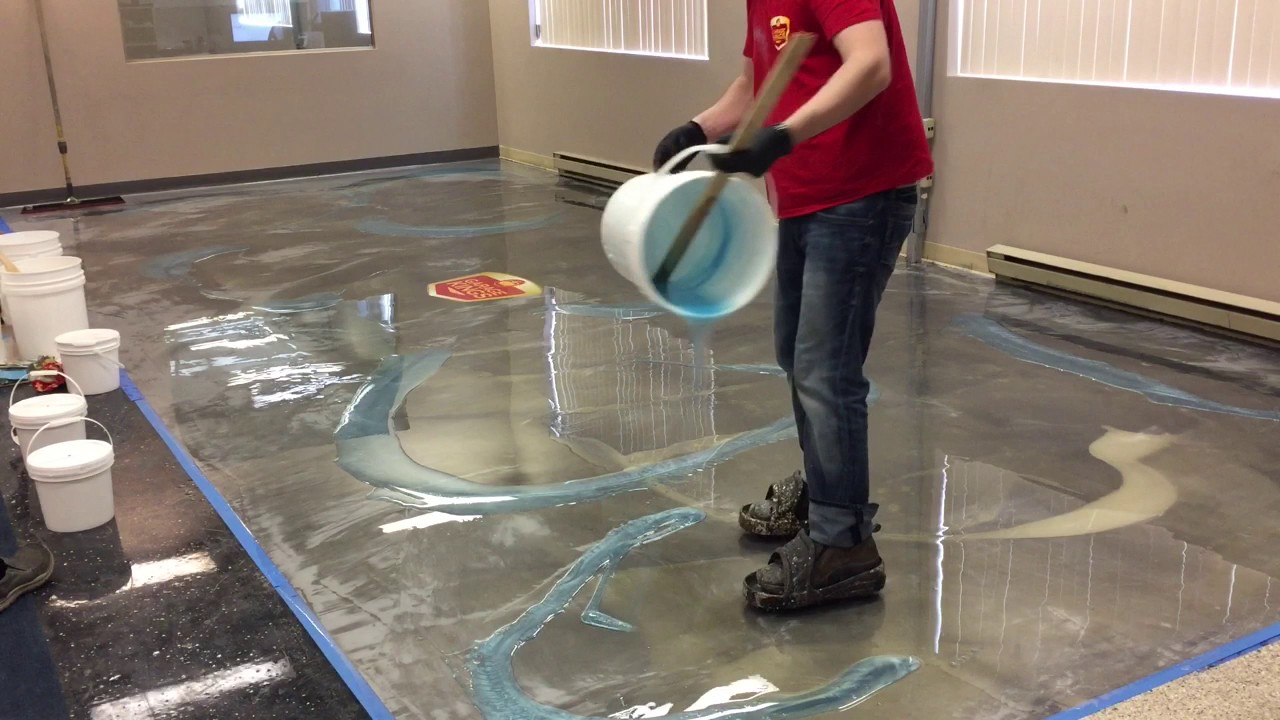
Epoxy is most commonly used in floor coatings, primers, and other materials involving buildings and constructions. They’re thermostat plastics made by reacting two chemicals together. It’s commonly used in industrial settings mainly because they’re durable, chemical resistant, and they offer strong adhesion to any surface.
Owing to its strength, it’s no wonder why epoxies are commonly used today in a variety of projects. From fixing wobbly furniture to sealing floors, you can trust this type of adhesive to do the job it’s intended for. While they can also be advantageous for different projects, they can also put you in a tight spot when it’s spilled in the wrong places.read more about wobbly furniture at https://www.nytimes.com/1986/10/26/nyregion/home-clinic-don-t-throw-it-out-repair-that-wobbly-old-furniture.html
Because it’s difficult to remove, experts know better than to accidentally use it in excess in their ceramics and potteries. Epoxies usually start as a two-part liquid that’s mixed to form a hard glue. Once the epoxy hardens, it can be very difficult to remove. But there are times when the mistake is unavoidable.
That’s why it’s important to find the right removal technique for epoxy-stained material to avoid damaging it. Here are some tricks to help you:
Using Heat
One important thing to note when trying out removal strategies is that it’s always recommended to do a small test first to verify that your technique will not ruin your material. This implies that using heat to remove an epoxy adhesive in your ceramic is a good way to solve your problems. The best material to use here is a heat gun.
Heat guns are the most ideal equipment to use when removing hardened epoxies on ceramics. Since extreme heat is needed, a heat gun often goes as hot as 1000 degrees Fahrenheit which is the most ideal temperature to melt the adhesive. The adhesive softens in about 30 to 60 seconds. Since the glue will again be hardened in a matter of minutes, you must scrape it immediately using a plastic scraper. Click here to read more information about melting advice.
Be sure to use PPE in the process because heating can cause the formation of vapors that can cause eye and respiratory irritation. Once you’re done removing all the glue, clean the ceramic with an all-purpose cleaner to remove any char marks left by the heat gun.
Using Acetone
Another technique of removing epoxy from ceramic or pottery is through the use of acetone. Again, if you’re using this, be sure to test a little bit on a small surface on your item to make sure that it won’t react with the ceramic. Once you’ve made sure that it’s okay to use, proceed with the removal process.
Acetones can easily be found since it’s the main ingredient of nail polish removers. But be sure that when using it, the area is well-ventilated. Also, use rubber gloves to protect your skin. Place a few drops of acetone on a small piece of cotton then rub it all over the epoxy you’re trying to get rid of.
Allow the acetone to melt the adhesive, which takes about 10 to 20 seconds. Once it’s melted, quickly scrape the resin using a plastic scraper. Be sure not to push too hard as it might cause damage to your item. Finish it off by cleaning your ceramic with a rag to remove dust and residue.
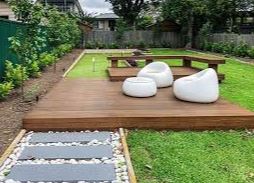
Have you always longed for a beautiful yard but you’re not sure if you could afford to build it as well as pay for landscape maintenance company? While it’s true that landscaping your yard is going to cost you money, it doesn’t mean you’ll have to break the bank while doing it. If you plan probate explained your landscaping project carefully you can actually achieve your dream yard at half the price. Of course, you’ll still need to shell out cash but if you do your research you’ll discover that there are tons of ways to landscape your yard at a minimum cost.
A beautiful lawn will enhance the overall look of your home and you’ll feel more confident to invite family and friends over. Furthermore, a gorgeously manicured yard will increase your home’s curb appeal if you intend to sell it in the future giving you a good ROI. When planning for your landscaping budget, don’t forget to include landscape maintenance costs.
The following are cost-effective ways to create a beautifully landscaped garden:
Opt For Easy To Maintain Ground Cover
You can achieve a lush and verdant lawn but it’s going to cost you an arm and a leg to keep the weeds out. And in order to maintain the greenness of your grass, you’ll have to water it regularly and invest in weed treatments and fertilizers. If you are looking for a cheap way to make your lawn presentable consider getting easy to maintain ground cover as a grass alternative. Grass covers germinate really fast and they can fill in the empty spaces of your backyard with attractive flowers and leaves thereby saving you money. Landscape maintenance is also cheaper with ground cover.
Try To Combine Soil With Compost
Planning to fill your garden with plants and flowers? Before you add packs of costly soil in your cart why don’t you combine soil with compost to give your plants the nutrients they need without going broke, read more about compost at https://www.epa.gov/recycle/composting-home. Yes, with this technique you can actually cut down on soil costs all you need to do is to combine equal parts of compost with potting soil to create a healthy mixture for your plants.
Shop For Shrubs and Young Plants
Most homeowners shop for mature flowers and plants because let’s face it, full-grown flowers and plants are much more attractive but unfortunately, they are pricier compared to seedlings. Why spend much when you can spend less on seedlings of the same species? You’ll just have to wait a little while until they are full grown. Nonetheless, if you are on a tight budget your best course of action is to invest in tiny seedlings. Don’t worry because if you care for them right they’ll grow and turn out beautiful in no time.
Wait For Clearance Sale
Yes, that’s right. Plant and flower vendors also offer clearance sale just like clothing brands. Wait until the season is over before you shop for shrubs, trees, and plants. The price difference will surprise you! The huge price drop will allow you to shop for more affordable plants and flowers. Usually, these nurseries go on sale at the end of the summer and spring season.
Takeaway
Landscaping and landscape maintenance requires financial dedication so you have to be committed. Before you embark on this project you have to calculate all possible expenses because remember, landscape maintenance is going to be an on-going expense but don’t worry as long as you plan, research and find budget-friendly ways to do landscape maintenance you’ll find that it’s actually doable.
Have you ever wondered why vinyl flooring technology has noticeably become a constant compared to other flooring market segments? In fact, it’s expected to see more growth in the coming years. However, when it comes to selecting a vinyl flooring product, homeowners should also pay close attention to the installation and application of the flooring product as much as they would to style and design aesthetics. When you choose a flooring installation method that’s not ideal for its environment or intended application, you’d end up with vinyl floors that are broken down.
You’re probably aware of the fact that most vinyl products are traditionally glued to the floor. This method involves the use of an adhesive to glue down the dry-back vinyl flooring to its base. However, a flooring technology is on the rise – the loose lay vinyl flooring where no adhesive, fasteners or tongue and groove mechanisms are needed to hold them in place. These rectangular-shaped vinyls that are supported by rubber allow them to lay flat on an even surface. Once they are laid on your subfloor, they remain there. Wellington Home Remodeling can assists you more better toward vinyl flooring options for your home.
Aside from the fact that they’re easy to install, you won’t have any trouble maintaining them. Plus, they’re also known to be durable and resistant to scratches. This leaves us no reason to wonder why there has been an increasing demand for luxury vinyl flooring technology in recent years. Check out these 3 reasons why you should choose this type of flooring product.
Simple Installation
This unique flooring type is incredibly simple to install. What makes them unique is the fact that the back portion of these vinyl planks operate on friction in order to get a grip of the subfloor underneath. However, you have to make sure that the subfloor is completely dry, level, smooth, clean, and free of dust. it’s also important that the planks are firmly attached with each other. There may be a need to crop some of the last few planks to get a better fit. The fact that this type of flooring doesn’t need staples or glue to set in position makes it ideal for homeowners who aren’t willing to spend too much time and money to have the job completed.
They’re Portable
Unlike other types of flooring technology, the process involved in removing and reinstalling loose lay vinyl plank flooring is extremely quick and painless. This convenience of moving planks with ease is a great advantage especially if you plan to relocate in the future. This benefit will help you create your own interior designs while saving you money overtime.
High Resistance to Expansion and Contraction
Did you know that most flooring types react to moisture by expanding and contracting? One of the best things about loose lay vinyl flooring is that it is made to resist moisture. Homeowners who choose this type of flooring technology can expect their floor size to remain the same while keeping that fresh look for years. This is the ideal choice for areas such as kitchens, basements, and bathrooms where moisture is likely to collect.
Nowadays, the appealing benefits of using this unique type of flooring are being experienced by homeowners and business owners alike. Make your choice today!
If you want to make the most out of your rooftop, creating your very own green rooftop garden might be one of the best choices you’ve ever had not just for aesthetic purposed but for sustainability as well. Various chefs around the globe are into rooftop gardening growing organic fruits and vegetables in the middle of the city!
Living in the city can be challenging and with limited space, their innovation paved way for a green revolution, well in the rooftop! There are countless benefits to having a green roof and if you thought that it’s a new concept, well, think again. A green rooftop can be traced back to the 1940s. Currently, it has continued to gain momentum whether you live in the city or the suburbs. Why not you should get more assistance from a commercial roofing contractor for your rooftop.
Green roofs are composed of different layers and these layers serve a specific function. Decide whether you want to maintain it frequently or if you’d rather have it low maintenance.
Here are some helpful tips in starting your own green roof.
Choose the most suitable green roof
Intensive Green Roof
Is your green roof’s main purpose is to be a garden with a large variety of plants? An intensive green roof requires planting mediums to be much deeper which is about 7-24 inches deep. Frequent maintenance is advised and a footpath is needed for easy access. Aside from footpath, adding benches or water-resistant sofa can be great for relaxation.
Extensive Green Roof
For low-maintenance and self-sustaining vegetation, and an extensive green roof with about 1.6 -5 inches deep planting medium is great supporting a few types of grass, mosses, and succulents.
Hybrid Green Roof
With a Hybrid green roof, plants that grow well in about 5-7 inches vegetation are appropriate. This may include herbs and shrubs. There is not much maintenance required since it only needs irrigation from time to time.
Remove the mystery from picking paint hues with these four simple advances, utilizing shading swatches as your guide.
You’ve most likely heard (or encountered) that a shading swatch or paint chip shading never looks the equivalent once it’s on your divider. There is some reality to that. All things considered, you’re taking a shading from a little, handheld cardstock square and applying it over a substantial surface. What’s more, except if your room is lit up by a similar business review fluorescent apparatuses that light up home focus paint passageways, you’re likewise changing the light that will influence the shading.
Paint swatches can be overpowering when you’re confronting a mammoth choice of them at the store. However, there is an idiot-proof process that guarantees the shading you accomplish on your dividers is the thing that you are seeking after. Here is our master, no-come up short traps to pick the ideal paint shading.
Select Multiple Paint Colors
The critical initial phase in picking a paint shading is getting it out of the store’s paint walkway. Pick a bunch of shades, or obtain the whole fan deck of hues, and bring the chips home. Keep a receptive outlook; no one can really tell which one will wind up as your last pick. Take a gander at them in the room you need to paint consistently of day, from splendid morning light to brilliant evening light to light lit haziness. Hold them against existing upholstery textures, work of art, lampshades, and drapes. You should seriously mull over featuring a shading from a toss cushion or window hangings to integrate the room. Slender your decisions to a few hues. Chips that show planning hues are particularly useful. They recommend what shade of blue would look great with your walnut feasting table and ecru draperies.
On a paint strip, the majority of the hues are varieties of a similar equation. They share similar suggestions however have diverse forces. The plain base shading will give you the best thought of the connotation and shading family. Be mindful of contrasting two swatches next with each other. They may appear to be comparable on paper yet uncover their actual tint when remaining solitary. On the off chance that you would like to think about comparative hues, pick to test a bigger segment of both on the divider.
Paint Swatches on Your Wall
Back in the painted walkway, request test measures of your most loved hues. Most organizations offer little size compartments, which may cost a couple of dollars. In case you’re thinking about a few paint hues, this can include, yet it’s a commendable venture. Nothing will enable you to pick a shading superior to anything seeing the tint connected to the divider. Take the examples home and brush them on the dividers of your room. Paint expansive areas of the divider at eye level. The bigger the segment the better to assess the shading, so don’t be timid.
You’ll have the capacity to paint over these test plots, regardless of whether they are dull shades and you require a groundwork. When the test segments are dry, drape craftsmanship over them, push furniture before them, and remain back in the space to perceive what they look like. Live with these sprinkles on the divider for a brief period to perceive what they look like on changed days. A rich yellow may end up being more splendid than you need on radiant days, or a savvy green may turn dull and frustrating on cloudy days. How the hues take a gander during the evening in the gleam of your lights is additionally something to test.
Ask a Paint Expert
Once you’ve settled on the triumphant tint, counsel the specialists at the paint store about what sheen to pick. In view of what divider surface you have—regardless of whether drywall or mortar or framing—and whether the dividers should be shielded from dampness (in a washroom or kitchen) or fingerprints (along a passage or stairwell), they’ll recommend the best sheen to accomplish the shading you need. For instance, level sheen paint gives you shading nearest to the first paint chip, though semi-gloss paint will have a moderate intelligent quality that will hose the liveliness of the shading somewhat.
Focus on a New Paint Color
Presently you have all that you have to paint the dividers. Proceed! Be daring! You’ve got your work done, so the shading you’ll have by the day’s end work is exactly what you need for your room. Southern California has the best options available.
Onyx could be right for you if you’re eyeing for a new countertop material that will add a touch of class to your kitchen or if you’re looking for something beautiful, rare, and unusual. Before incorporating it into your home, click here for more knowledge about onyx.
This isn’t the case as a lot of people think all stones are “rock hard” and completely solid. The perfect example of a stone that needs extra care is onyx. To harden the slab and keep it together, onyx countertops usually include a fiberglass backing compound.
Onyx slabs are not extracted from the ground as well as other stones. This makes the slabs are much smaller in size than something like granite.
Onyx is not hard
The softness characteristic is the biggest problem with onyx. With regular use, it does not hold up well. You’ll most likely be going to scratch up the surface if you move pots and pans around or prepare vegetables or fruits on it. It will have no trouble scraping your countertop by using anything hard or sharp.
Another danger is an acidic liquid like vinegar or lemon juice which are cooking essentials. It could etch and dull the surface if you spill any of this stuff on onyx.
Needs serious maintenance
Onyx requires proper sealing and then cleaned with the special stone cleaner at frequent periods to make it less prone to scratching and staining which makes onyx countertops needs a lot of sustenance.
Proper planning for the needed fee on having them refinished periodically if your onyx countertops see normal daily use.
Onyx is expensive
Onyx stone doesn’t come cheap. Onyx is the most expensive countertop material you can get despite the needed maintenance and characteristics it possesses.
Onyx is rare
A rare stone, onyx is seldom used for countertops. What’s more, every single piece of onyx is distinctive. Use Onyx if you want to really set your home on the next level.
Onyx is attractive
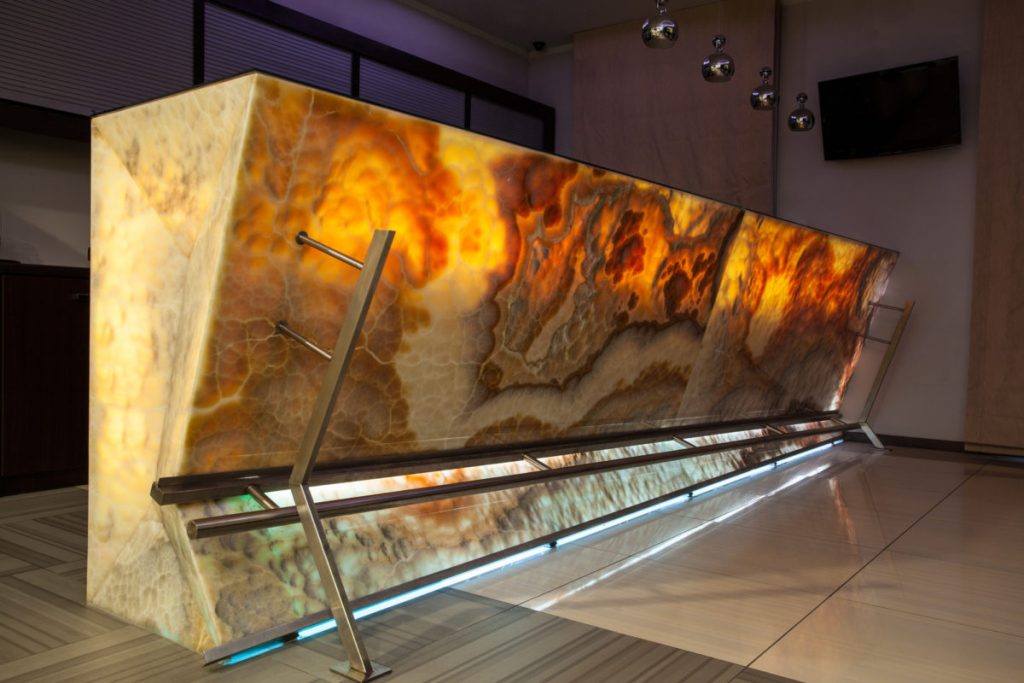
There is no contradiction in the sheer beauty of the stone although onyx is pricey and rather impractical. Onyx veining adds contrasting colors to make these slabs look like works of art and it comes in different colors.
It brightens up the room when the light hits it and it shines. Putting backlit on onyx makes a wonderful glow that you can’t get any other way for an added appeal.



 Have you always longed for a beautiful yard but you’re not sure if you could afford to build it as well as pay for landscape maintenance company? While it’s true that landscaping your yard is going to cost you money, it doesn’t mean you’ll have to break the bank while doing it. If you plan